
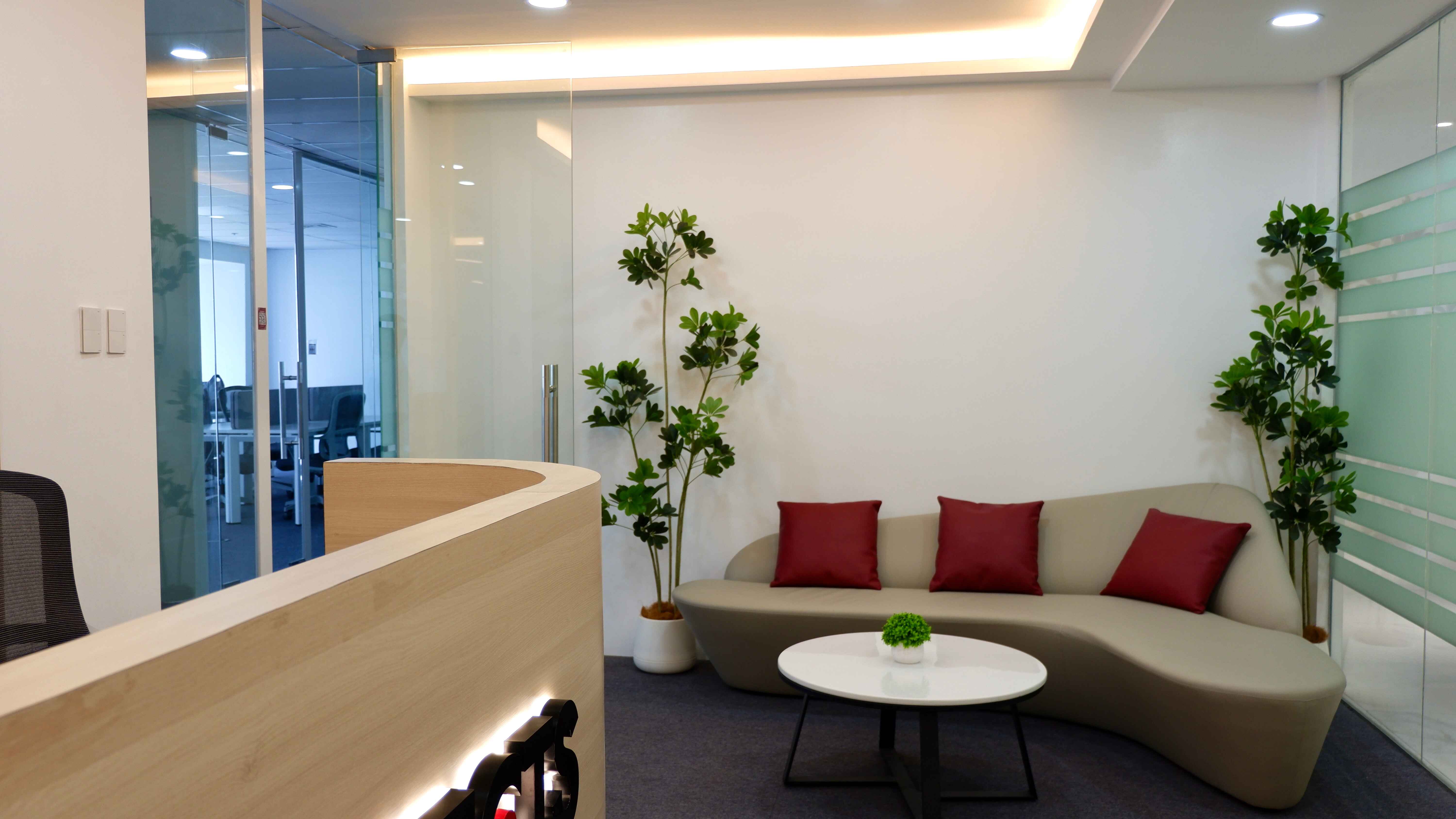
how to choose the right office size for your growing business
Getting office size wrong is one of the most expensive mistakes a growing business can make — and it happens in both directions. Rent too much space and you're bleeding money on square footage nobody uses. Rent too little and you're cramming people into a space that hurts productivity, morale, and your ability to host clients properly.
The right office size isn't a guess — it's a calculation based on headcount, work style, growth plans, and how your team actually uses space day to day. Here's how to get it right.
Start With Headcount, Not Square Footage
Most founders start by browsing available spaces and picking whatever looks big enough. The better approach is to work backward from your team.
Basic planning benchmark:
- Allow roughly 70–100 square feet per employee for a standard open-plan setup
- Add extra space for meeting rooms, a reception area, storage, and shared amenities
- Factor in 15–20% buffer space for growth, unless you're planning to relocate again soon
A 20-person team, for example, typically needs somewhere in the range of 1,800–2,500 square feet once shared spaces are factored in — not just 20 desks squeezed into a room.
Factor In How Your Team Actually Works
Headcount alone doesn't tell the full story. Work style changes how much space each person effectively needs.
- Fully in-office teams need full desk coverage for every employee, plus meeting and break areas.
- Hybrid teams can often work with a lower desk-to-employee ratio, since not everyone is in the office on the same day.
- Remote-first teams may need very little daily desk space at all — sometimes just a registered address and occasional access to a meeting room rather than a full office lease.
Getting this wrong in either direction is costly: overprovisioning a hybrid or remote team wastes money on empty desks, while underprovisioning an in-office team creates a cramped, unproductive environment.
Plan for Growth — But Don't Overpay for It Today
A common mistake is signing a lease sized for where the company hopes to be in two years, not where it actually is today. That extra space sits mostly empty for months while you pay full price for it.
A more capital-efficient approach:
- Lease space that comfortably fits your team today, plus a modest buffer
- Choose flexible lease terms or buildings that allow expansion into adjacent units
- Consider staged growth: start smaller, add space or relocate as headcount actually increases
- For very early-stage or lean teams, consider whether you need daily desk space at all versus a flexible or virtual setup while the business proves itself
Don't Forget Non-Desk Space
Office size calculations often focus only on desks and miss the space that actually makes an office functional:
- Meeting and conference rooms
- Reception or waiting area for clients and visitors
- Break room or pantry space
- Storage for documents, equipment, or supplies
- Circulation space — hallways and walkways aren't wasted space, they're necessary for a functional layout
A space that looks "big enough" on a floor plan can feel cramped in practice if these areas were left out of the calculation.
Location Also Affects the Right-Sizing Decision
Where you're located changes how office size decisions play out financially. Prime locations like BGC, Ortigas, and Makati carry very different price-per-square-foot rates, which means the same headcount can require very different budgets depending on where you sign a lease. A team that comfortably fits a larger footprint in a lower-cost district might need to right-size more aggressively in a premium one — which is exactly why matching size decisions to location, and not just headcount, matters.
Signs You've Outgrown (or Overbought) Your Current Space
Signs you need more space:
- New hires have no permanent desk
- Meeting rooms are booked solid days in advance
- Storage overflow is creating clutter in working areas
Signs you have too much space:
- Entire sections of the office sit empty most days
- You're paying for meeting rooms or amenities your team rarely uses
- Hybrid or remote policies have quietly reduced daily headcount in the office
Either signal is worth acting on before your next lease renewal, rather than waiting until the mismatch becomes a bigger financial drag.
If your team is still in the early or lean stage and daily desk space isn't the priority yet, it's worth exploring flexible alternatives before committing to a fixed-size lease. Providers like LgoConnects offer virtual office services — including a registered business address, mail handling, on-demand meeting rooms, call handling, and registration support — so growing businesses can secure a professional presence without overcommitting to space they don't need yet.
Final Thoughts
The right office size isn't about picking the biggest space you can afford or the cheapest one available — it's about matching square footage to how your team actually works today, with just enough room to grow without paying for space that sits empty. Calculate from headcount and work style first, factor in non-desk space, and revisit the decision as your team and location needs evolve.
Need Support?
Enquire about our services