
interview rooms 101 why first impressions start before the interview
Candidates form an opinion of your company before the interview even begins. It starts in the lobby, in how long they wait, in whether the room they're led into feels prepared or improvised. A hiring manager can ask all the right questions, but a cramped, noisy, or distracted-feeling room quietly undercuts the impression you're trying to make — and top candidates notice.
Here's what actually goes into a good interview room, and why it matters more than most hiring teams assume.
Why the Room Affects the Outcome
Interviews are a two-way evaluation. While you're assessing the candidate, they're assessing your company — and a big part of that read happens through the environment, not the questions. A disorganized space or constant interruptions can signal a disorganized workplace, whether that's fair or not.
In competitive hiring markets, where strong candidates often have multiple offers on the table, that first impression can be the difference between an accepted offer and a ghosted follow-up email.
Privacy and Confidentiality
Candidates are often interviewing while still employed elsewhere, and confidentiality matters to them as much as it should to you. An interview room should be fully enclosed, not a curtained-off corner of an open floor, so conversations about compensation, current employment, or performance history stay private.
This matters just as much for the company's side of the conversation — internal salary bands and hiring strategy aren't meant for a shared coworking floor either, which is why teams handling sensitive hiring decisions often lean on a private office instead of open seating.
Comfort and Neutral Ground
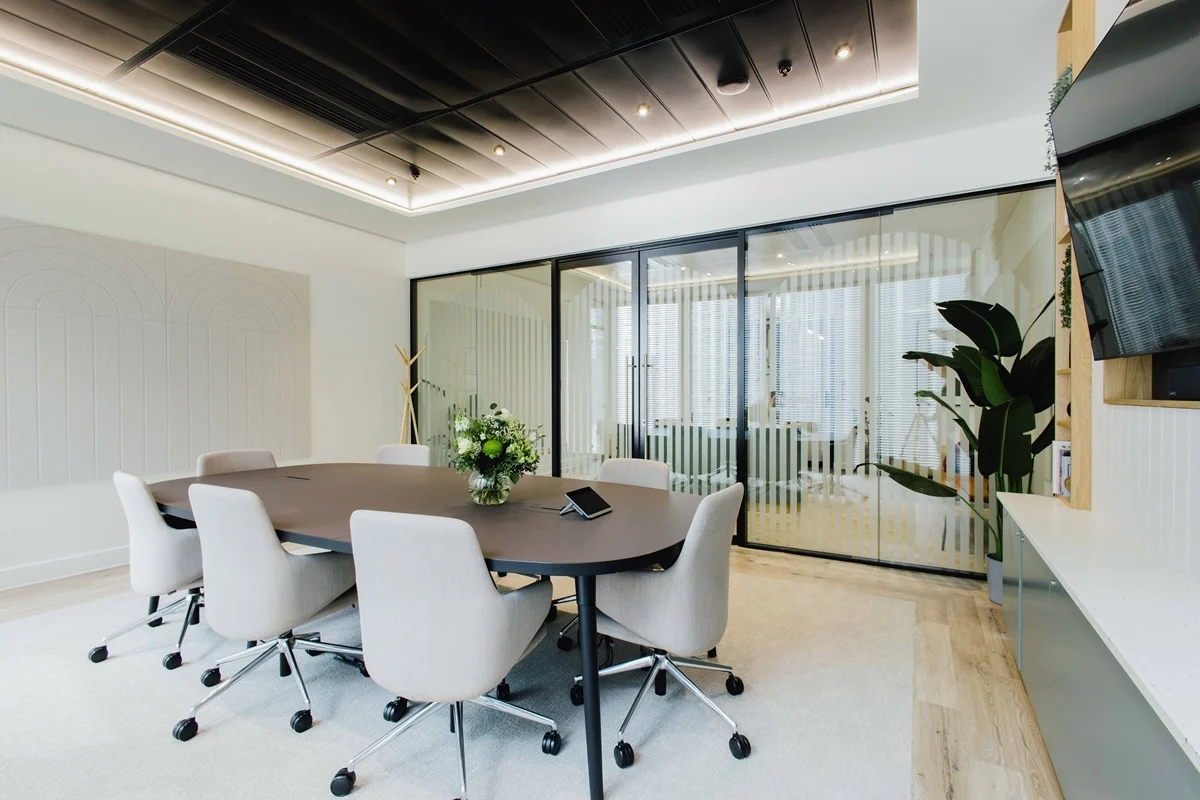
A good interview room sits somewhere between a formal boardroom and a casual meeting spot. Hard chairs and fluorescent lighting can make an already-nervous candidate more guarded, while a space that feels considered — comfortable seating, natural light, a clean table with nothing except water and notepads — tends to produce more relaxed, honest conversations. This is especially useful for later-stage interviews, where you want candidates to be candid about expectations, concerns, or competing offers.
Professional Setup and Technology
Many interview processes today include a remote panelist or a technical assessment, so the room needs to support more than just two chairs facing each other:
- Reliable Wi-Fi for video calls with remote interviewers
- A screen or monitor if the role requires a live technical or portfolio review
- A quiet, soundproofed setting so a video call doesn't pick up outside office noise
- Basic amenities like water and a clean, distraction-free table
If your process regularly loops in remote hiring managers, this technology checklist matters as much as the room's appearance.
Location and Convenience
An interview room in a recognizable business district makes logistics easier for everyone. Candidates commuting from across Metro Manila are more likely to arrive relaxed and on time when the location is easy to find, near public transit, and doesn't require navigating an unfamiliar residential building.
Business districts like BGC, Ortigas Center, and Makati work well for this reason — they're centrally located, easy to give directions to, and immediately signal a legitimate, professional operation, even if the interview room itself is rented rather than owned.
This is also why more companies — especially those hiring remotely or scaling a team without a full office lease — turn to serviced interview rooms rather than defaulting to a coffee shop or a video call for every stage. At LgoConnects, interview rooms in BGC, Ortigas, and Makati are available by the hour, so hiring teams get a private, professional space only when they actually need it.
Frequently Asked Questions
Why does the interview room matter if the questions are the same?
Because candidates evaluate your company through the environment as much as the conversation. A private, well-prepared room signals organization and professionalism, while a rushed or noisy setting can create doubt, even if the interview itself goes well.
Can I rent an interview room without a long-term office lease?
Yes. Serviced interview rooms are typically available on an hourly, half-day, or full-day basis, which makes them a practical option for companies that interview periodically rather than daily.
What's the difference between an interview room and a regular meeting room?
An interview room is generally smaller and set up for one-on-one or small-panel conversations, with a stronger emphasis on privacy and a calm, neutral atmosphere, compared to a meeting room built for group discussions or presentations.
Do interview rooms support video conferencing for remote panelists?
Most serviced interview rooms include reliable Wi-Fi and screen access to support video calls, which is useful when part of the hiring panel is joining remotely.
The Bottom Line
The interview room is part of the hiring process, not just the backdrop for it. Privacy, comfort, working technology, and an accessible location all shape how a candidate experiences your company before a single question is asked — and in a competitive hiring market, that experience can quietly tip the decision in your favor.
Need Support?
Enquire about our services